Cesar Legaspi (1917–1994) was a pioneering Filipino modernist painter and a leading figure of the Neo‑Realist movement in the Philippines. He finished Fine Arts at the University of the Philippines in 1936, and later pursued advanced studies as a scholar at the Cultura Hispánica in Madrid (1953–54) and at the Académie Ranson in Paris.

Legaspi was among the Thirteen Moderns, a group of artists who broke away from academic traditions to embrace modernist expression. His canvases were noted as the least decorative, instead confronting viewers with disturbing images of anguish such as Man and Woman, and dramatic tropes of struggle and triumph like The Survivor.

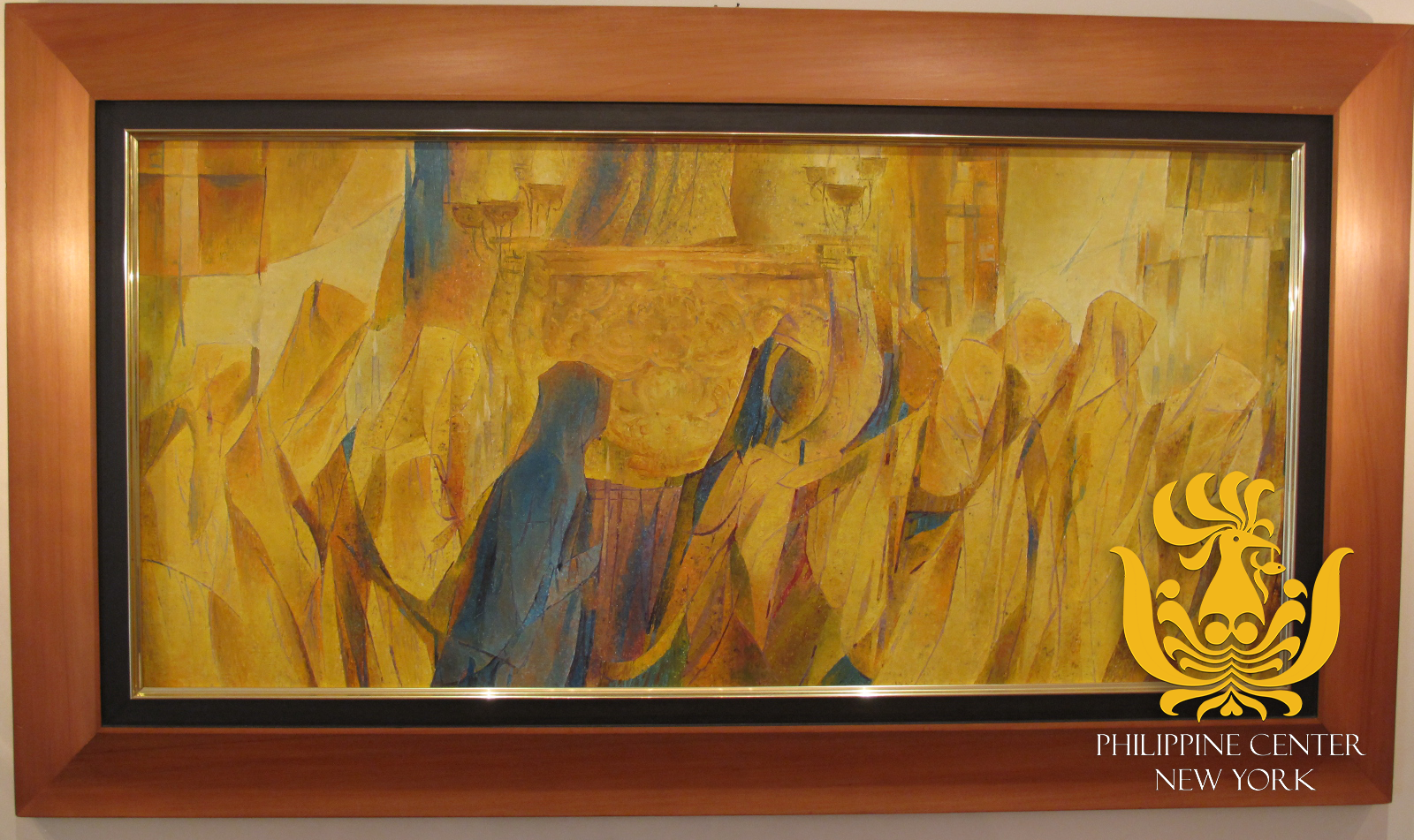
He reconstituted cubism’s geometric ordering of figures into a social expressionism, rendered with interacting forms and rhythmic movement. This approach gave his works both formal innovation and humanist depth.

Legaspi won First Prize for “Gadgets” at the Art Association of the Philippines in 1949, and was later awarded the Patnubay ng Sining at Kalinangan by the City of Manila in 1972. His international presence included participation in the First Plastic Arts Conference in Rome (1953), the São Paulo Biennial in Graphic Arts (1967 and 1969), and exhibitions at the Wraxall Gallery in London (1982).

His contributions culminated in his recognition as National Artist for Painting in 1990, affirming his role as one of the pillars of Philippine modern art.