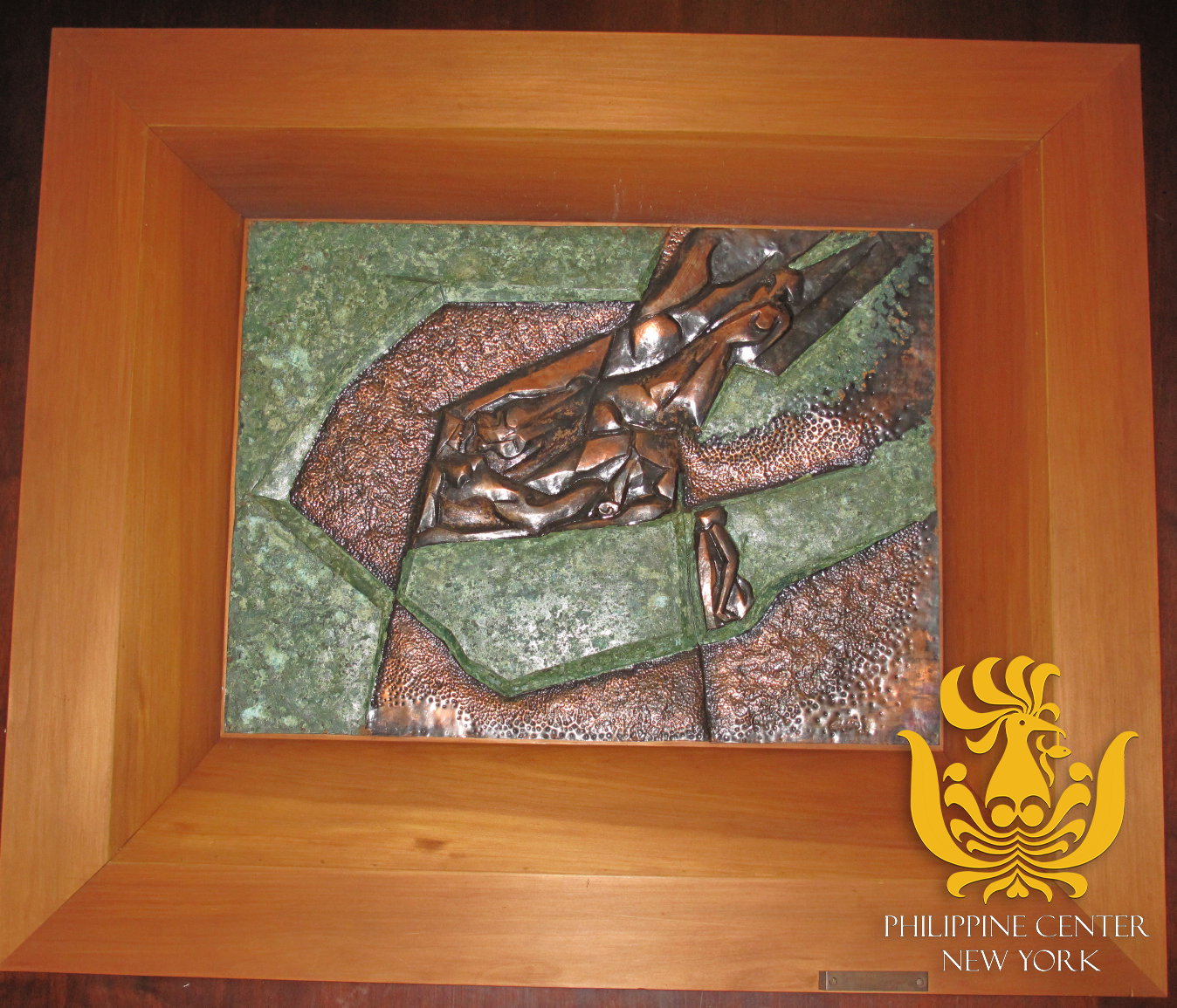
Eduardo Castrillo was a pioneering Filipino sculptor, jewelry artist, and designer celebrated for his monumental public works and bold innovations in metal sculpture. He studied at the University of Santo Tomas College of Fine Arts and quickly rose to prominence in the 1970s with his dynamic creations in embossed copper and welded brass.

Castrillo’s sculptures dominate public spaces in Metro Manila, Cebu, and memorial parks across the Philippines, including iconic works such as the People Power Monument (1993), the Bonifacio Monument (1998), and numerous civic and religious memorials. His art is distinguished by its fluid lines, interlocking forms, and expressive power, often simplifying reality into planes or multiplying them into reverberating shapes. He explained that this aesthetic—both neo‑realist and cubist in tendency—was “essentially the resolution of the conflict between representation and structure.”

His achievements earned him numerous honors, including the Araw ng Maynila Centennial Award, the TOYM (Ten Outstanding Young Men) Award, and the Republic Cultural Heritage Award. He also represented the Philippines at the Paris Biennial and the Venice Biennial, affirming his stature on the international stage.

Castrillo’s work has been the subject of several books, notably Beyond Art by Dr. Rod Paras‑Perez (1970) and Breaking Out: An Eduardo Castrillo Sculptural Tour by Alfredo Roces (1995). These publications document his groundbreaking contributions and his role in shaping Philippine modern sculpture.