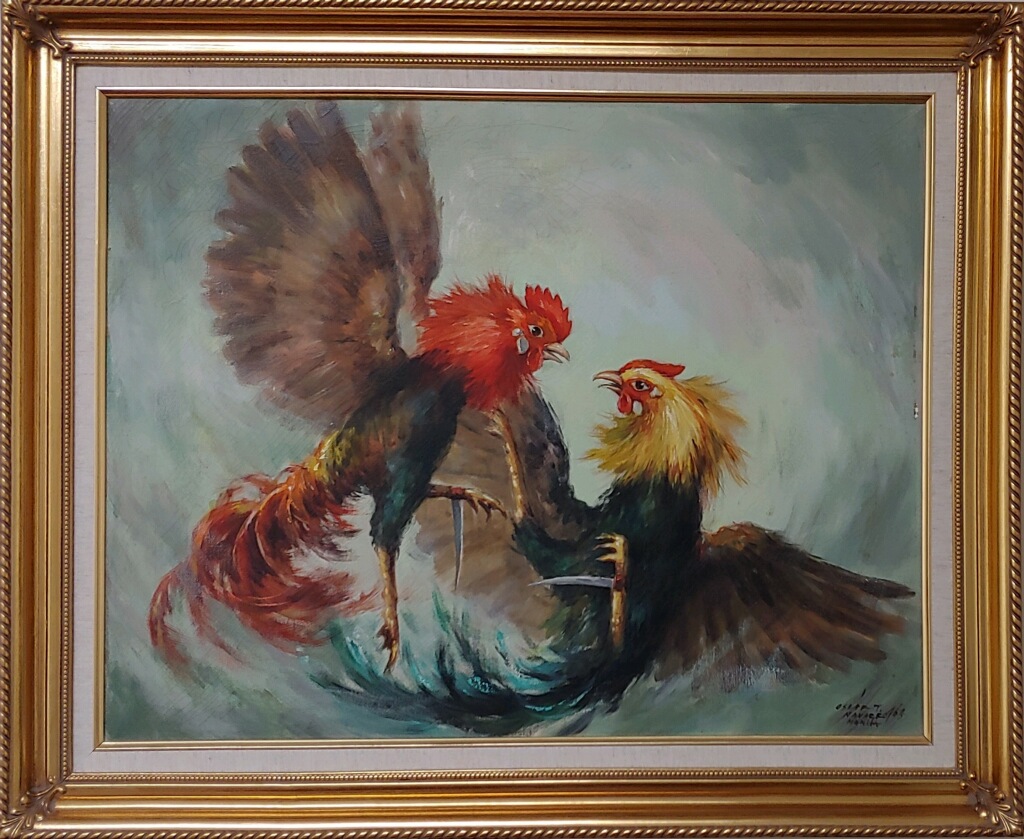
Oscar T. Navarro (1921–1973) was a central figure in the classical tradition of Philippine art, emerging from the prestigious University of the Philippines School of Fine Arts. His career was profoundly shaped by the upheaval of World War II; he was part of a cohort of art students whose education was tragically cut short by the conflict, and he was one of the few among his peers to survive the Bataan Death March. Following the war, Navarro established his studio in Ermita, Manila, in 1948. While many of his contemporaries transitioned toward commercial art for the tourist trade, Navarro distinguished himself through a disciplined commitment to technical excellence and the high standards of the academic realist style. Regarded as one of the most faithful disciples of the "Amorsolo School," Navarro’s work is dedicated to documenting a rural Philippine lifestyle that was already beginning to vanish during his lifetime. His landscapes are frequently characterized by a rich palette of deep greens and earthy browns, used to depict pastoral scenes, village markets, and coastal vistas. Beyond his well known landscapes, Navarro was a versatile Master of Composition, producing large scale murals for Clark Air Base and the Filipinas Hotel, as well as unique series focused on the medical profession. His late period works occasionally showcased a shift toward more energetic, bold brushwork and vibrant colors, yet he remained a steadfast guardian of the Filipino soul’s visual heritage until his death at age 52